



Forces acting on a bicycle
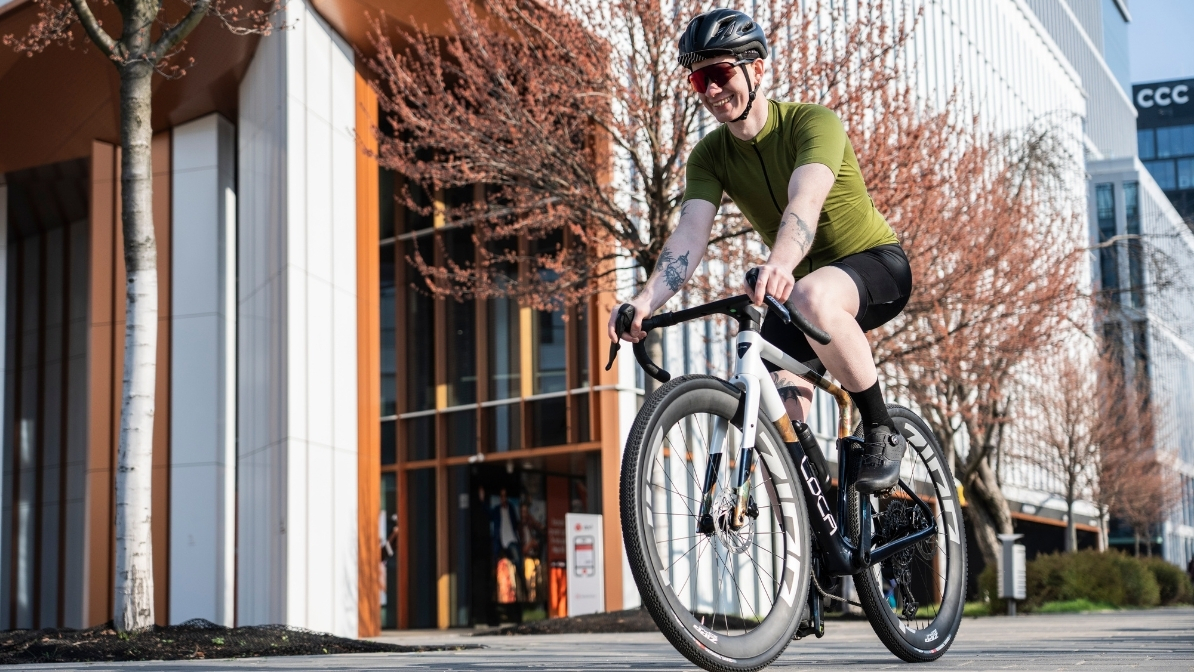
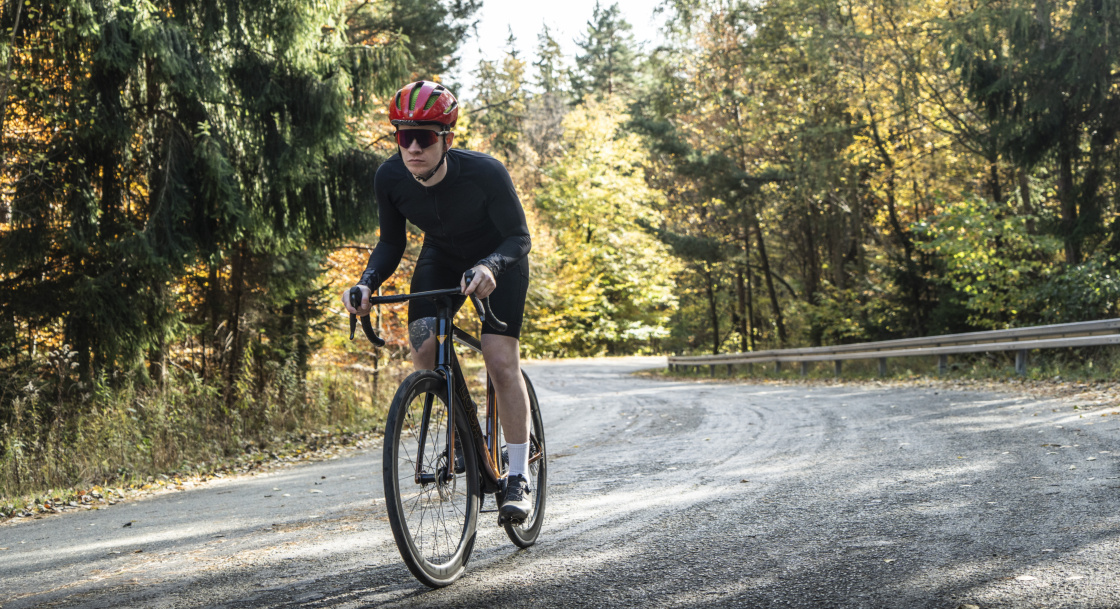
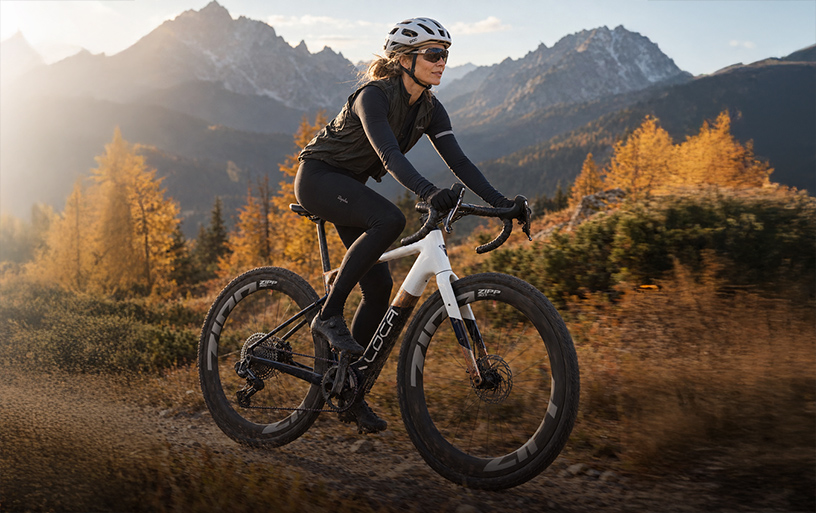
A sunny Saturday, no wind, you and a scenic three-hour gravel ride - sounds great, right? Now let us imagine a different, slightly more abstract perspective: that of your favorite bike. For it, this is almost a nonstop fight for survival.
To simplify things, the optimal cadence, meaning the number of crank revolutions per minute (RPM), is around 90 RPM. What does that mean for a Saturday ride like this? 90 RPM × 3 hours × 60 minutes = 16,200. More than 16 thousand crank revolutions. Quite a lot, right?
Assuming you are riding at around 30 km/h, the power generated by your legs is roughly 200 W. The number itself does not sound threatening. But once you put it into the context of continuous, cyclical effort and 16,200 crank revolutions, the loads become truly enormous. And that is only an average value. During sprints or climbs, the peak forces are far greater and can reach as much as 1000-1500 W. Under loads like that, the bottom bracket shell can flex by even a few millimeters relative to its axis.
A 3-hour ride like this is the equivalent of hanging from a shelf or sink with a 30-50 kg load well over ten thousand times, climbing steep stairs nonstop for several hours, and burning as many as 2,500 calories.
Sprints can be compared to standing on a single pedal while holding a... fridge in your hands. Quite a lot for a delicate means of transport that often weighs less than 10, and sometimes even 8 kg.
So the question is: how do bikes cope with forces like these? As a rider, how can you be sure your bike will withstand them? In short: who is really responsible for bicycle safety, and how?
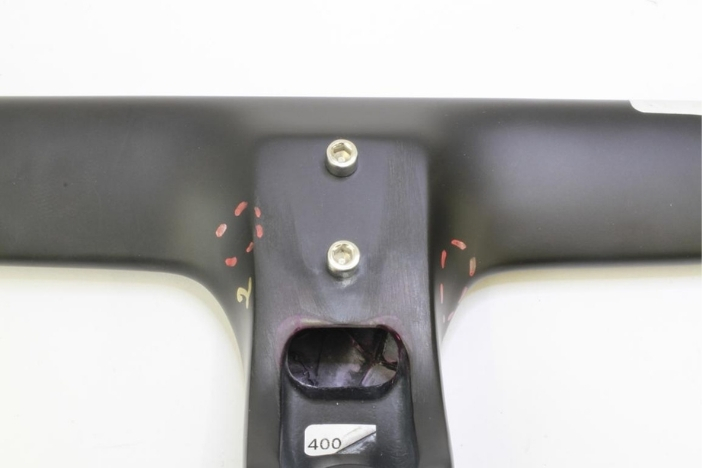 A handlebar that failed testing, with the crack points marked
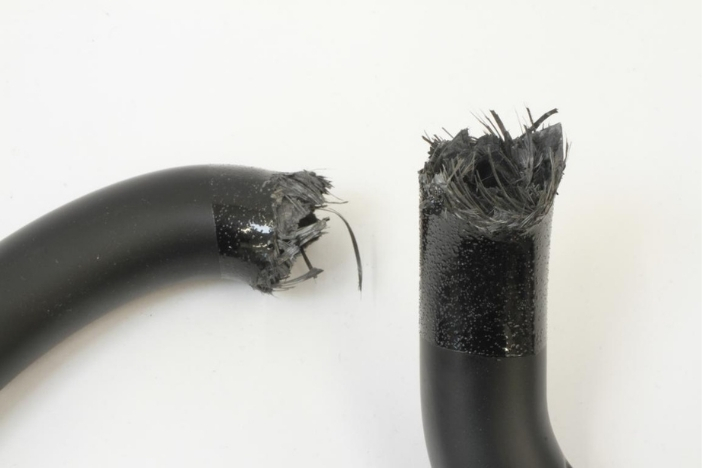 A handlebar that failed at the shif-brake lever mounting area
Are bikes on the market tested?
Coming to the rescue is a three-letter acronym (cue the fanfare here): ISO, along with its smaller brother, EN. The first stands for International Organization for Standardization, while the second means European Norm. These are the standards that currently lead testing across most industries in Europe and around the world, including tonight's main act: bicycles.
At present, the most popular and most widely recognized standard is ISO 4210, which includes, among other things, detailed descriptions and requirements for the fatigue tests that bicycles entering our market must pass.
Because of the cyclical nature of the loads a bicycle experiences in real use, this type of testing is considered reliable and the closest reflection of real-world working conditions for this means of transport.
Fatigue tests designed on specialized machines are intended to simulate as accurately as possible the real forces bicycles deal with every day.
This is how, among other things, the cyclical loading of a frame during pedaling is tested, as well as the load on the fork and head tube during repeated braking with a front hydraulic disc brake. Anyone who has ever gone over the handlebars knows just how big the forces acting on this part of the bike can be.
Every bicycle placed on the market should meet the relevant safety standards, and ISO-based testing makes it possible to assess how a specific frame behaves under repeated loading and whether it stays within the assumed safety margins. But is ISO alone really enough?
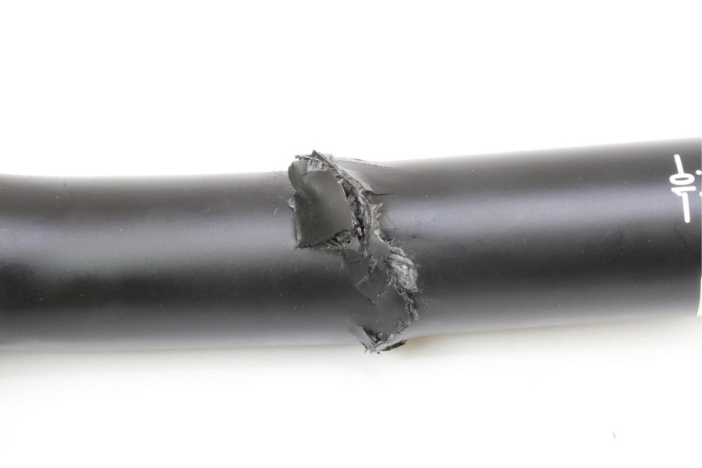 A damaged seatpost - we did not approve this model for sale
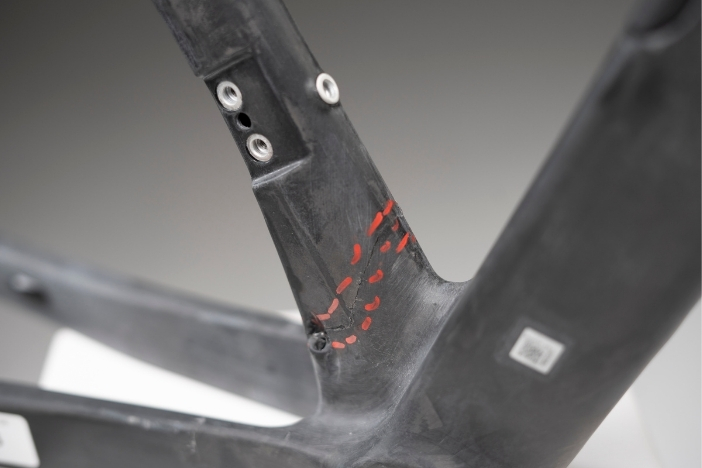 This frame passed the manufacturer's tests, but under more restrictive standards it failed quickly
Beyond ISO
Relying solely on ISO testing may seem entirely sufficient, but there are a few catches.
A separate sample for each stage
Classic ISO 4210 fatigue tests allow a separate frame sample to be used for each stage of testing. Imagine a manufacturer sending three samples of a new frame to the lab. The model first goes through tens or hundreds of thousands of pedaling cycles. In later stages, the fork's behavior under braking is checked, and then, for example, the handlebar during sprints. The catch? Each test takes place on a different frame sample. It is a convenient simplification, but in practice it paints an overly optimistic picture of the durability of the entire bike. In the real world, after all, we do not ride three different bikes.
Relying on In-House Factory Testing
ISO documentation used by bicycle manufacturers is often prepared on the basis of in-house tests carried out by frame factories, frequently located thousands of kilometers from the brand's headquarters. In such a case, a company based in Europe may have no way to verify the methodology or quality of the testing, which can lead to errors caused by carelessness, misunderstanding, or in extreme cases, unreliable reporting of results.
The result?
As the saying goes, paper will accept anything. As a result, both the manufacturer and the final seller may end up with a misleading view of the durability and safety of the bike they offer.
Why Most Manufacturers Rely Only on EN/ISO
We ourselves spent a long time wondering whether it was worth going beyond standard ISO testing. Unfortunately, there are many obstacles:
Costs
The situation here is very clear: frame fatigue testing is simply expensive. On top of that, the cost has to be multiplied by every frame model we want to test and, in ideal circumstances, by every size as well. The cost of testing a single frame sample can reach as much as €2300. No wonder relying on the frame manufacturer's ready-made in-house test results seems like the obvious way to go.
The destructive nature of testing
Fatigue testing takes a frame all the way to the end of its life cycle. Every sample used in this kind of testing effectively turns into a giant paperweight - it cannot be used to build a bike, because doing so would seriously endanger rider safety.
Time
Testing can take as long as several dozen days. Then there is shipping, communication, and all of it multiplied by the number of models and samples. Suddenly the season starts slipping away, and when launching a new bike, even a matter of weeks can make a clear difference and significantly reduce sales.
Restrictiveness
Test results are binary and leave no room for half measures: it's just PASS or FAIL. The more restrictive the frame test, the greater the risk that a given model will need corrections, reinforcement of certain elements, a redesign, or even a complete departure from a given design or factory that fails to provide the quality and safety we require. This takes both time and money.
How Can Bike Safety Be Increased?
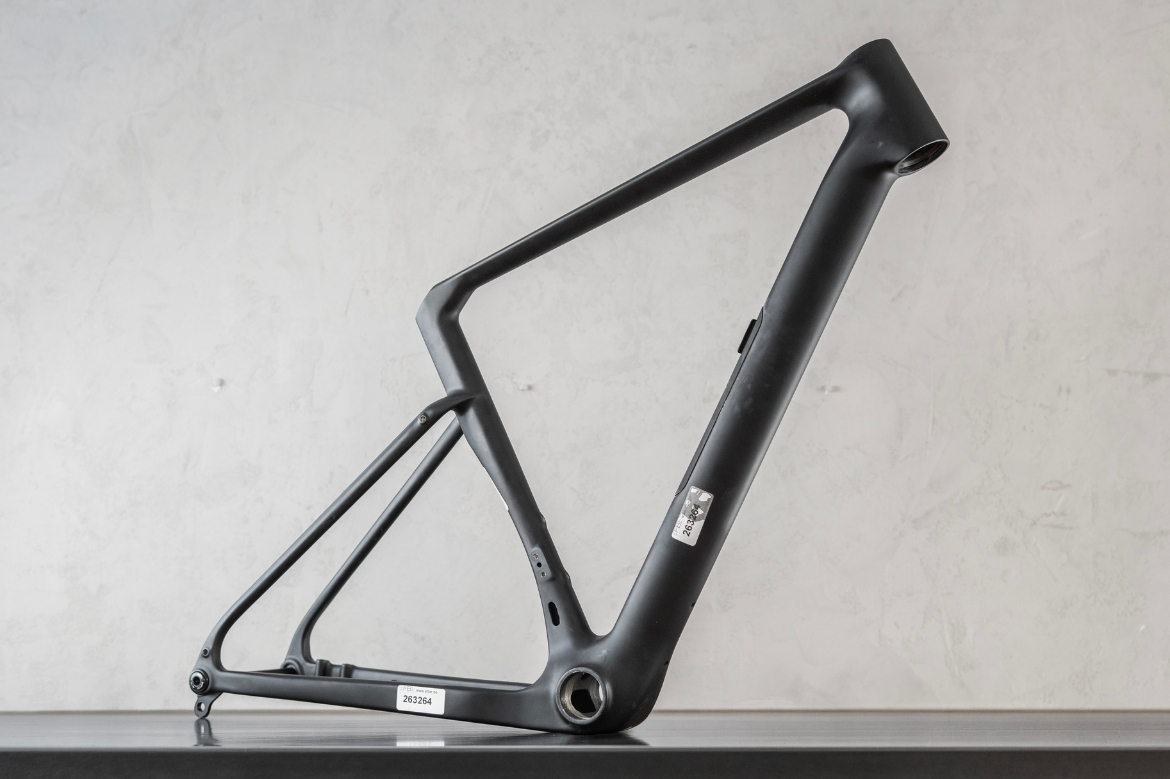
When bringing a new carbon gravel model to market - the LOCA Libre CF - we asked ourselves: what can we do to guarantee the users of our bikes, and ourselves too, because we ride LOCA bikes after all, maximum safety and the confidence that these machines are built for many years to come?
The answer turned out to be the German laboratory EFBE (Engineering for Bikes) - a pioneer in bicycle frame durability testing.
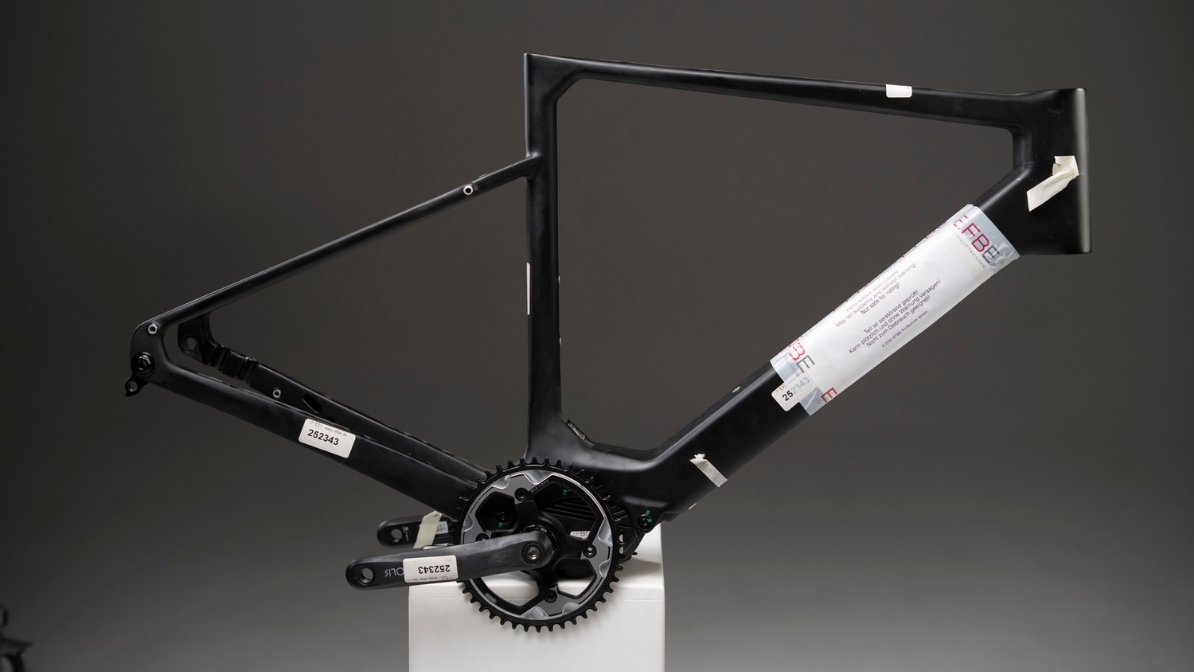 Rayo CF - testing is especially important in the case of electric bikes
About EFBE
Since 1995, EFBE has operated, in its own words, as the bicycle industry's guardian angel. It develops and refines bicycle durability tests, increasing rider safety in the process. It is a leading laboratory that manufacturers from across Europe turn to with their frames to check whether their products are safe. That made it hard for us to imagine a better partner.
So why did we decide on independent testing rather than relying only on ISO documentation prepared by the factories we work with?
Proven methodology
The frame tests we commission are carried out by an ISO-accredited laboratory in Germany. Once they are complete, we receive full documentation together with video materials and the tested frame samples. Thanks to the detailed information and direct communication with the lab, if the results are negative we can quickly and accurately identify weak points in the frames and then improve the designs to ensure the maximum safety and performance of our products.
Simulation that reflects real riding conditions
By identifying the simplifications present in the most common frame tests, EFBE has refined the processes and developed its own, more restrictive procedures. All stages of testing are carried out on the same frame sample, and the methodology itself allows for a more faithful simulation of many years of riding on a given bike.
How we test frames at LOCA BIKES
At LOCA, our main idea is to build the bikes we want to ride ourselves. This philosophy applies not only to component choice, but also to the entire production process, paint technology, frame design, and of course frame testing and quality control. So how do we make sure your bikes are safe and reliable?
Multi-stage quality control
We inspect our frames as soon as they are delivered, using a checklist with more than a dozen points. Later comes quality control of the paint finish after painting, assembly quality control on the stand once the bike has been built, and a final test ride during which we check the brakes and gears in real conditions. A lot, right? And it applies to every single bike that leaves us.
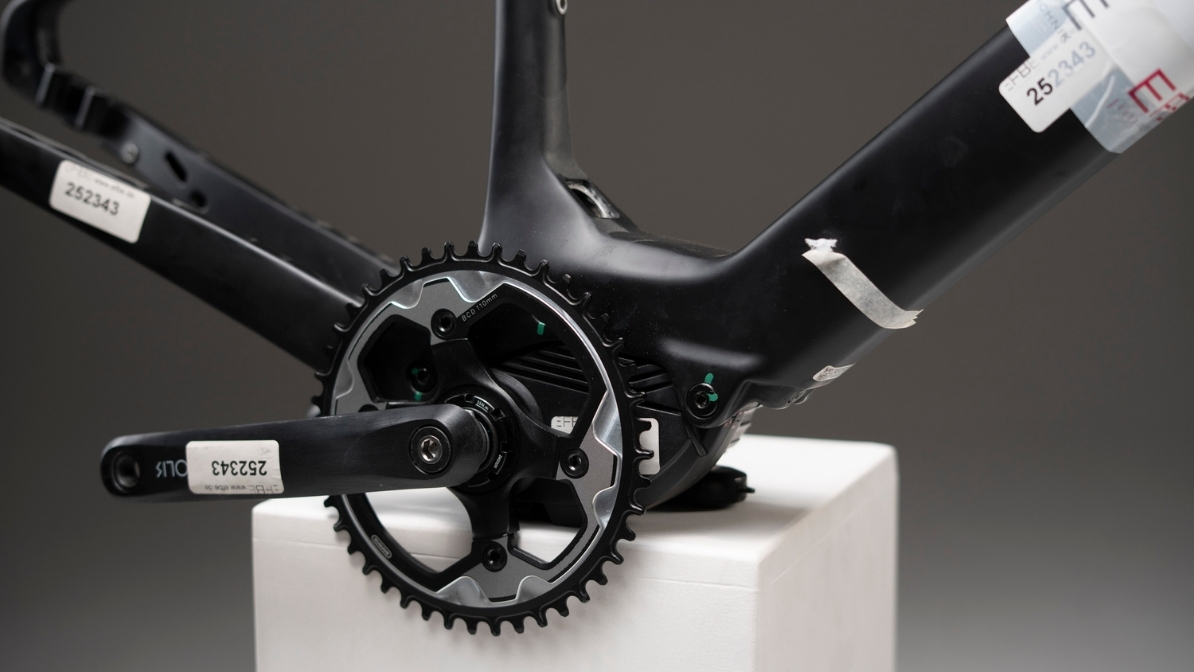 Rayo CF - durability test
Extended frame durability testing
Beyond classic ISO/EN standards, we test our frames in the leading German EFBE laboratory - according to standards that are more restrictive than ISO and with full confidence in the methodology used. Not to show off a popular ISO 4210 sticker, but to give you the highest possible confidence in the safety of our bikes.
Paint technology
We work with paint shops that have years of experience with bicycles. We are constantly testing new technologies, types of coatings, and primers to choose the solution best suited to a given material and the intended final effect.
You have probably seen our new titanium Brisa TI. For now, we still do not offer it in custom paint finishes, only in anodized form. Due to the specific properties of titanium, the primers used with steel or aluminum frames would not provide sufficient durability in this case.
Brisa will be available in the CSTM paint range soon, as soon as we select the right technologies.
We strive for perfection
In our case, bringing even a single frame model to market is an enormous amount of work. Only in this way can we give you the best product possible - reliable, fast, durable, beautiful, and simply tremendous fun to ride.